The Hills the World Envy Us
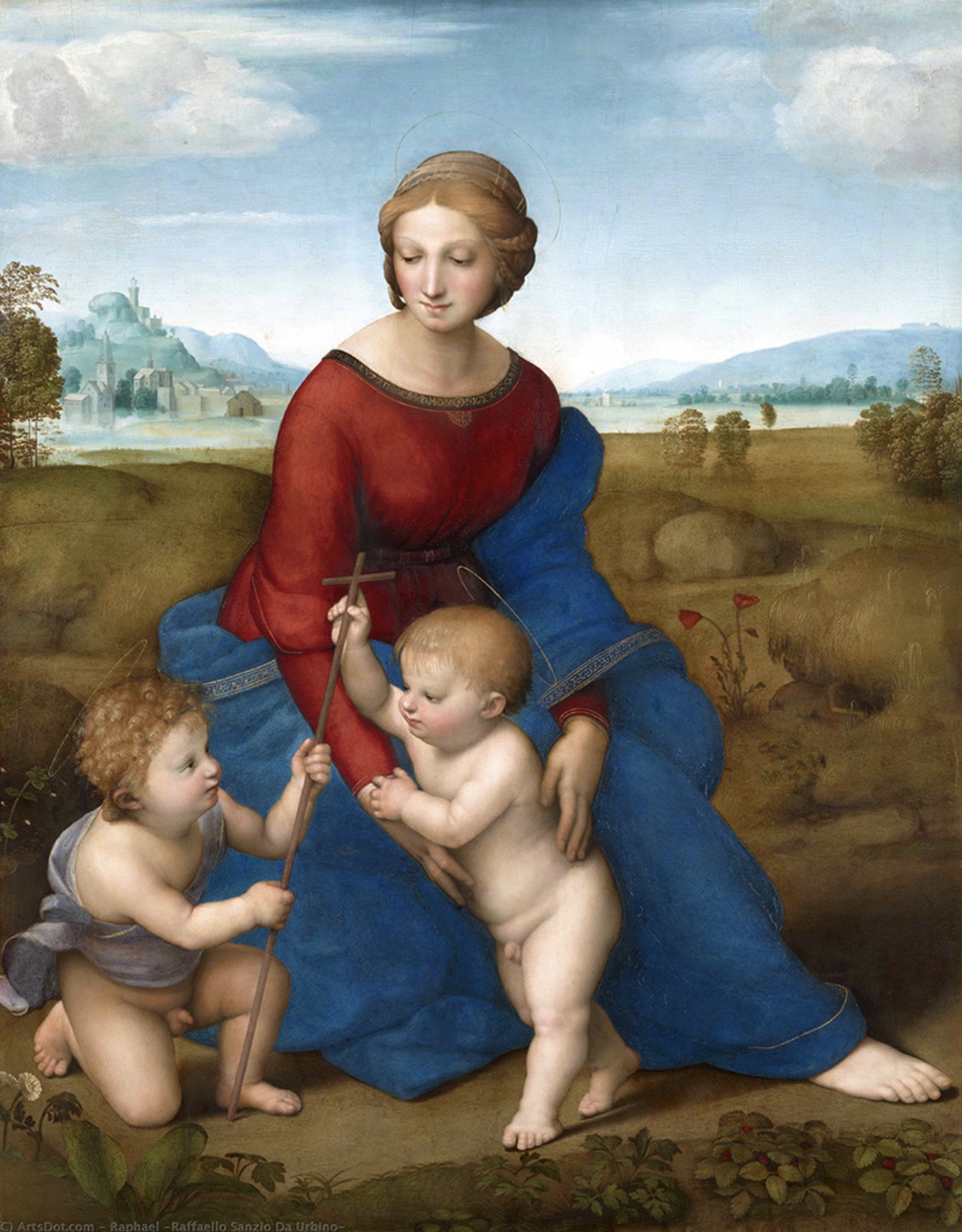
Many people do not realize that they already know the landscape of Umbria. They saw it in the masterworks of the Renaissance. Raffaello put Lake Trasimeno in the background of 'Madonna del Belvedere' (at Kunsthistorisches Museum, Vienna). In Piero della Francesca, the same gentle Umbrian hills define the background of works such as 'The Baptism of Christ' and also 'The Nativity' (both at National Gallery, London), and The Resurrection (Museo Civico, Sansepolcro). The same landscape returns again in the paintings of Perugino and Pinturicchio: soft slopes, ordered light, and a horizon that feels immediately recognizable once you have seen it in reality.
Umbria has long been known as the Green Heart of Italy, a ‘designation’ that was used in books and written sources as early as the late nineteenth century. Over the past forty years, the phrase has been warmly embraced in initiatives promoted by the Region of Umbria and, more recently, it was formally adopted in 2022 as part of the region’s official branding system under the name “Umbria, the Green Heart of Italy.”
But Umbria also holds a unique place in the history of Italy because its name comes from the ancient Umbri, one of the oldest Italic peoples, who had already established their own civilization in central Italy long before the rise of Rome. Their extraordinary legacy survives in the Eugubine Tables, seven bronze tablets engraved with one of the most important written records of pre-Roman Italy. They preserve the Umbrian language, religious rituals, and traditions, offering a rare window into the spiritual and cultural world of an ancient people who lived more than two thousand years ago.
Regarding the Umbri, Herodotus provided one of the earliest literary references to them in the 5th century BC, describing them among the ancient populations of central Italy. Pliny the Elder, referring to an ancient folk etymology, wrote that the Umbrians were considered one of the oldest peoples of Italy. According to this tradition, their name was connected to the Greek word ὄμβρος (ombros), meaning "heavy rain," giving rise to the poetic interpretation of "the people of the rains," as they were believed to have survived a great flood. Their decline came later, as the Etruscans expanded into their territories and, according to Pliny, defeated many Umbrian settlements.
Over the centuries, Umbria became a crossroads where different civilizations met. The Etruscans settled its western territories, leaving behind extraordinary traces of their culture, while the expanding Roman world transformed the region into an important bridge between northern and southern Italy.
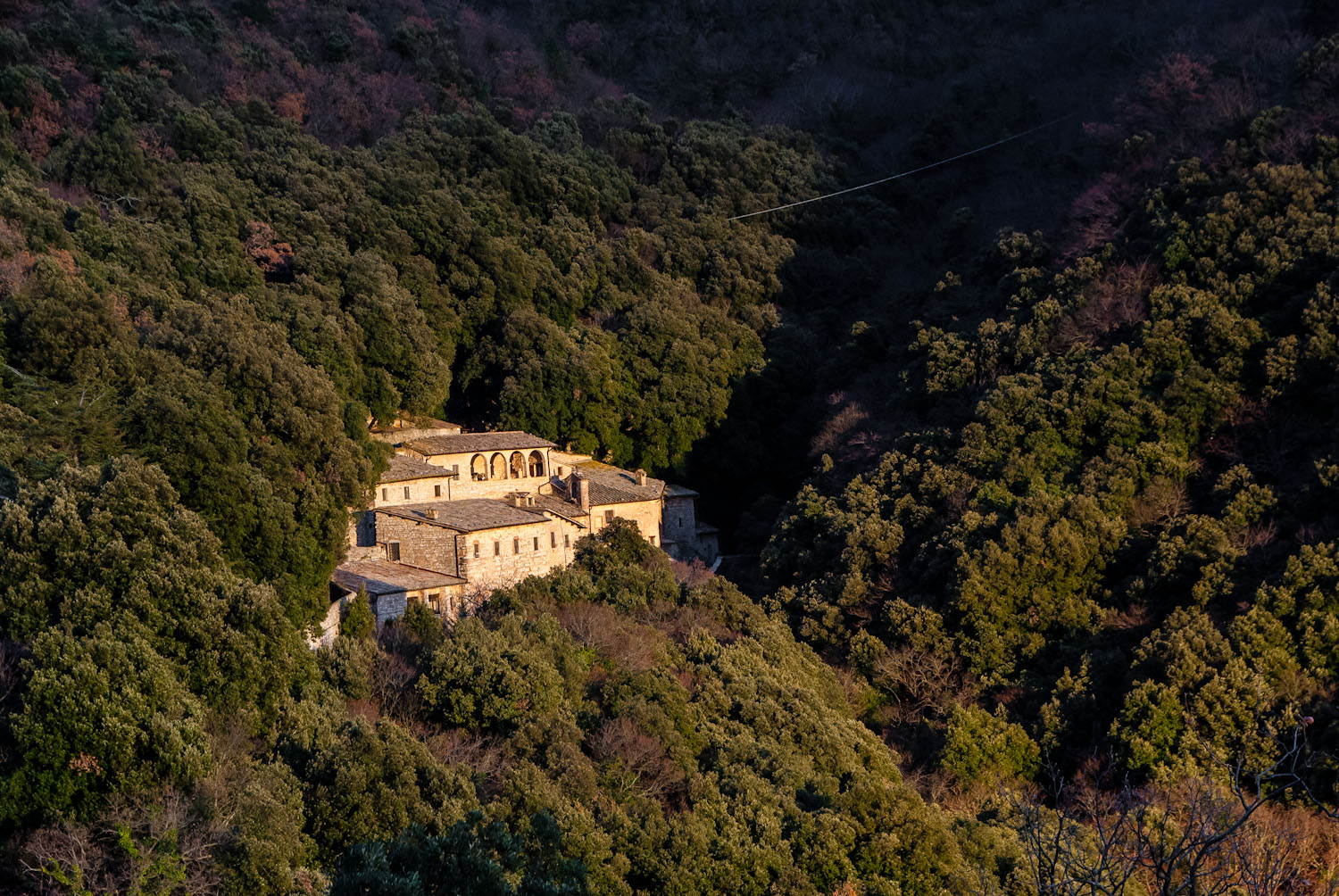
During the Middle Ages, Umbria became one of the spiritual hearts of Europe. It was here that figures such as St. Francis of Assisi and St. Benedict of Norcia were born—two personalities whose ideas shaped not only Italian history, but the cultural and spiritual identity of the Western world.
Later, during the Renaissance, Umbrian cities flourished as centers of art and humanism. Painters such as Perugino and Pinturicchio contributed to the artistic language that would influence even the young Raphael.
Unlike other Italian regions that became famous for their courts and political power, Umbria preserved a quieter legacy: a civilization built around communities, craftsmanship, faith, agriculture, and a profound relationship with the landscape.
Perhaps this is why Umbria feels timeless. It is not a place defined by one single moment in history, but by the extraordinary layering of many centuries—ancient, Roman, medieval, Renaissance, and beyond—still visible in its villages, its traditions, and its people.
Let's go back to the geography of Umbria.
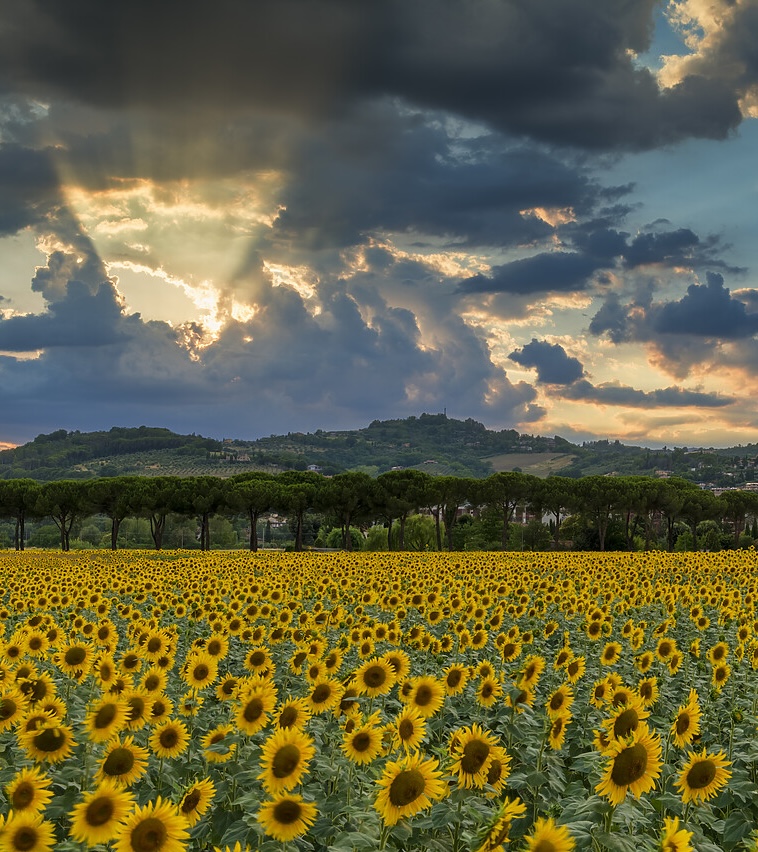
Unlike the dramatic peaks of the Italian Alps, Umbria’s highest mountain, Monte Vettore, reaches 8,123 feet and belongs to the Sibillini range. Then, the most distinctive elevations are Monte Subasio (4,262 feet), which rises above Assisi, and Monte Cucco(5,138 feet), both anchoring the landscape while remaining part of its gentle rhythm rather than dominating it. But the true identity of Umbria is found below: in its soft hills, typically between about 1,300 and 2,000 feet, shaped over centuries by farming, walking paths, and small stone towns that seem to grow naturally out of the land.
Umbria is also shaped by water. At its center lies Lake Trasimeno, the fourth-largest lake in Italy and one of the most historically significant. Broad and shallow, it has three inhabited islands — Isola Maggiore, Isola Minore, and Isola Polvese — a rare feature in the Italian lake system. Beyond Trasimeno, Umbria includes three smaller lakes that quietly punctuate the landscape, reinforcing the region’s balance between land and water rather than dramatic contrast. Equally distinctive is Cascata delle Marmore, the tallest man-made waterfall in the world. Standing 541 feet high, it was created by the Romans in 271 BC to drain the wetlands of the Rieti Valley. Commissioned by the consul Manius Curius Dentatus, the project redirected the Velino River into the Nera River through a monumental canal, forming a tiered cascade that still functions today. The waterfall remains operational, though regulated for hydroelectric power, with the water periodically released according to a schedule — a reminder that in Umbria, even nature often reflects centuries of human intelligence rather than domination.