What is Umbria?
So often I’m asked what Umbria is. Is it a city? Is it an area, something else entirely? Umbria is a Regione, I explain—but what, exactly, is a Regione?
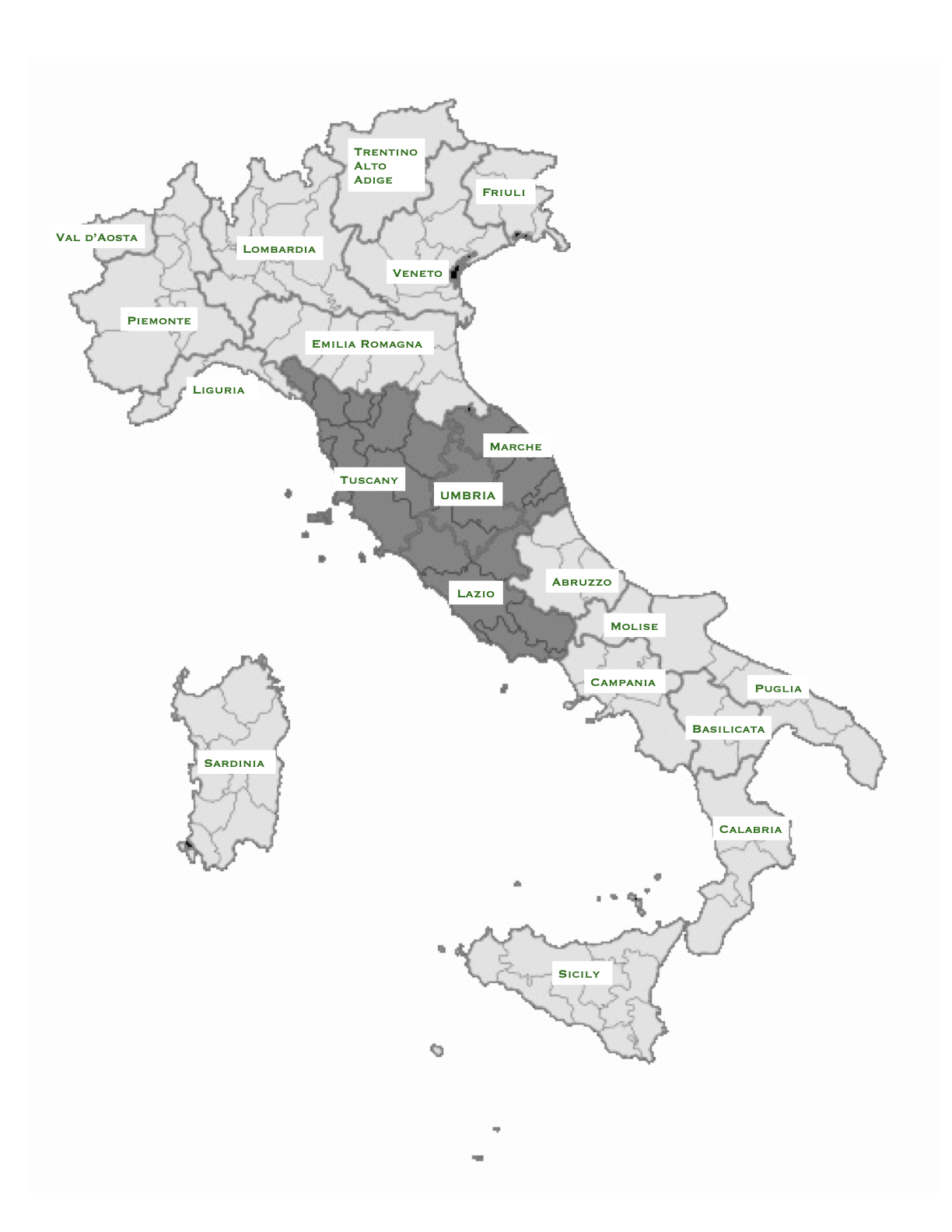
Italy is divided into 20 Regioni (regions), which are not merely geographic labels but deeply rooted cultural and administrative entities.
By definition, Central Italy is composed of 4 regions: Tuscany, Umbria, Lazio, and Marche. Each has its own identity, history, and traditions, and none can be mistaken for another.
Then 8 regions belong to what is considered Northern Italy, and 8 to the Southern Italy, yet even within these broad groupings the contrasts are striking. Every region is distinct in a very tangible way—customs, cuisine, architecture, and even social attitudes can change dramatically from one to the next. Italy grew up on rivalry, and that spirit still lingers today, perhaps most vividly in its dialects, which can be so different that Italians from neighboring regions may struggle to fully understand one another.
Umbria is traditionally described through a series of distinct inner areas: the Upper Tiber Valley, the Trasimeno area, the Valle Umbra, the Valnerina, and the Orvietano.
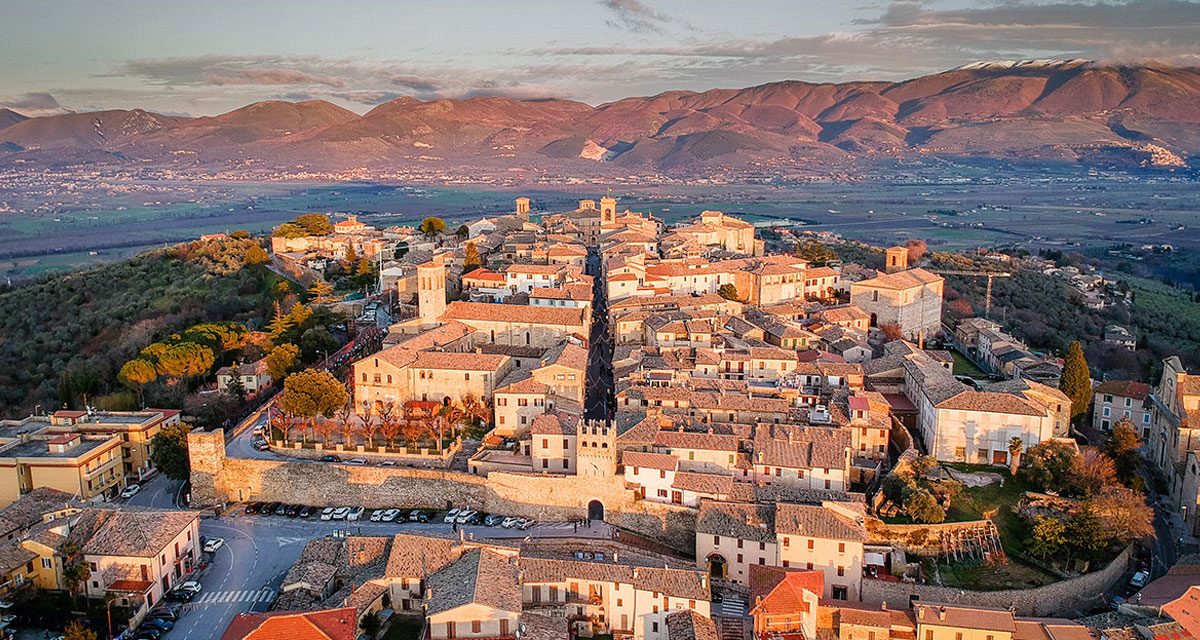
Within this framework, Perugia is th main city and it occupies a unique position. It rises on a hill at the northern edge of the Valle Umbra, overlooking the plain rather than inhabiting it, a vantage point that has long shaped its cultural and political role. Foligno, by contrast, lies fully within the valley, at its very heart, surrounded by open and fertile land. Further east, Gubbio belongs to the Upper Tiber Valley and sits at the foothills of the Apennines, where Umbria turns inward and becomes more rugged.
Let's go back to the Regione meaning. From an institutional point of view, it is Italy’s first-level administrative division. Each region functions as an autonomous entity, with constitutionally defined powers, an elected council, and a president. It acts as an intermediate layer of government, positioned between the central state and the provinces and comuni (municipalities).
Understanding Italy, therefore, means understanding its Regions—not as subdivisions of a single identity, but as living expressions of many identities that coexist within one country.
Do not forget that Italy is extraordinarily dense in character: you travel just a few kilometers and everything shifts—the landscape, the customs, even the way people cook and eat.
In Central Italy alone, the differences are striking. Tuscany has its unmistakable personality, while its quieter “sister,” Umbria, feels more intimate and inward-looking, almost secretive by comparison. Move east and the Marche reveal yet another identity, gentler and more understated, with a different rhythm of life. Then Lazio, which is a world of its own again—shaped by history, politics, and the gravitational pull of Rome.
We can say Italy is a mosaic of many “Italies,” each distinct, each with its own voice, yet all part of the same astonishing whole.